

Our best-selling 'Winning SBIR/STTR Grants' series
Proven, step-by-step guides to help you plan, write, and win competitive SBIR/STTR proposals across NIH and NSF programs.
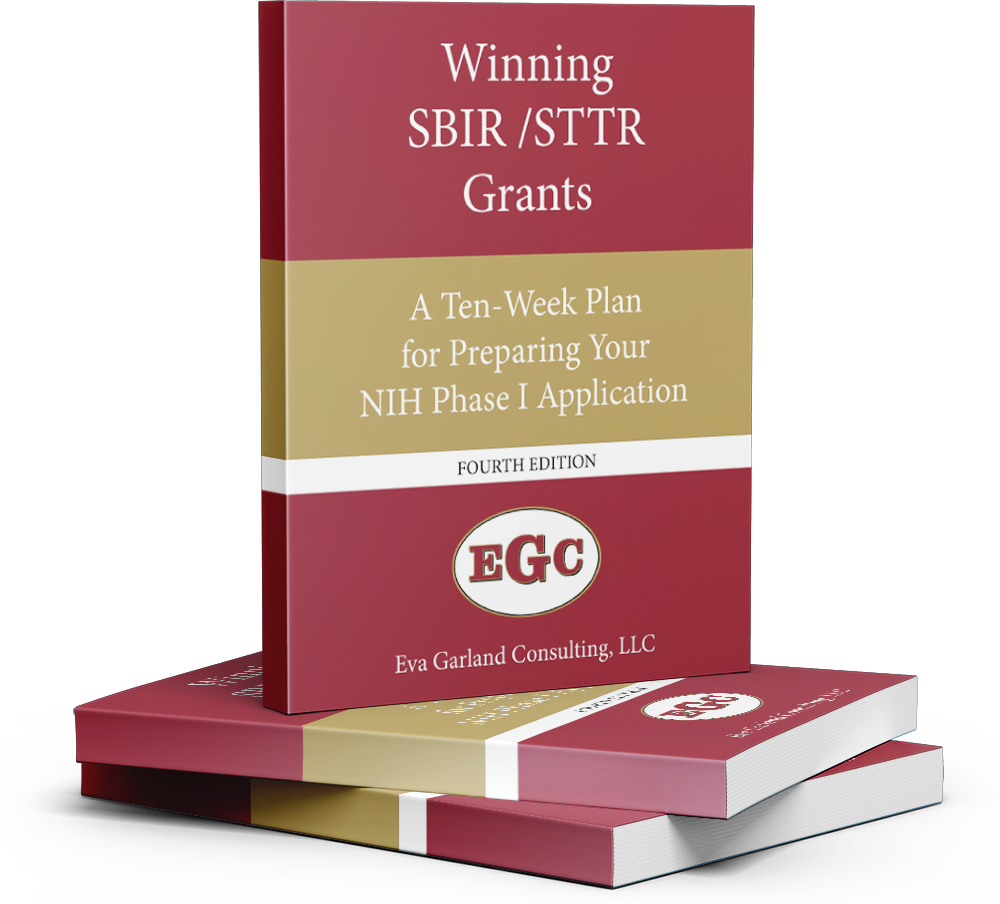
Winning SBIR/STTR Grants: A Ten-Week Plan for Preparing Your NIH Phase I Application
Currently in its fourth edition, his book presents a straightforward, user-friendly approach for preparing an NIH Phase I SBIR/STTR application. Topics include completing registrations, writing your research plan, budgeting, and submitting your proposal.
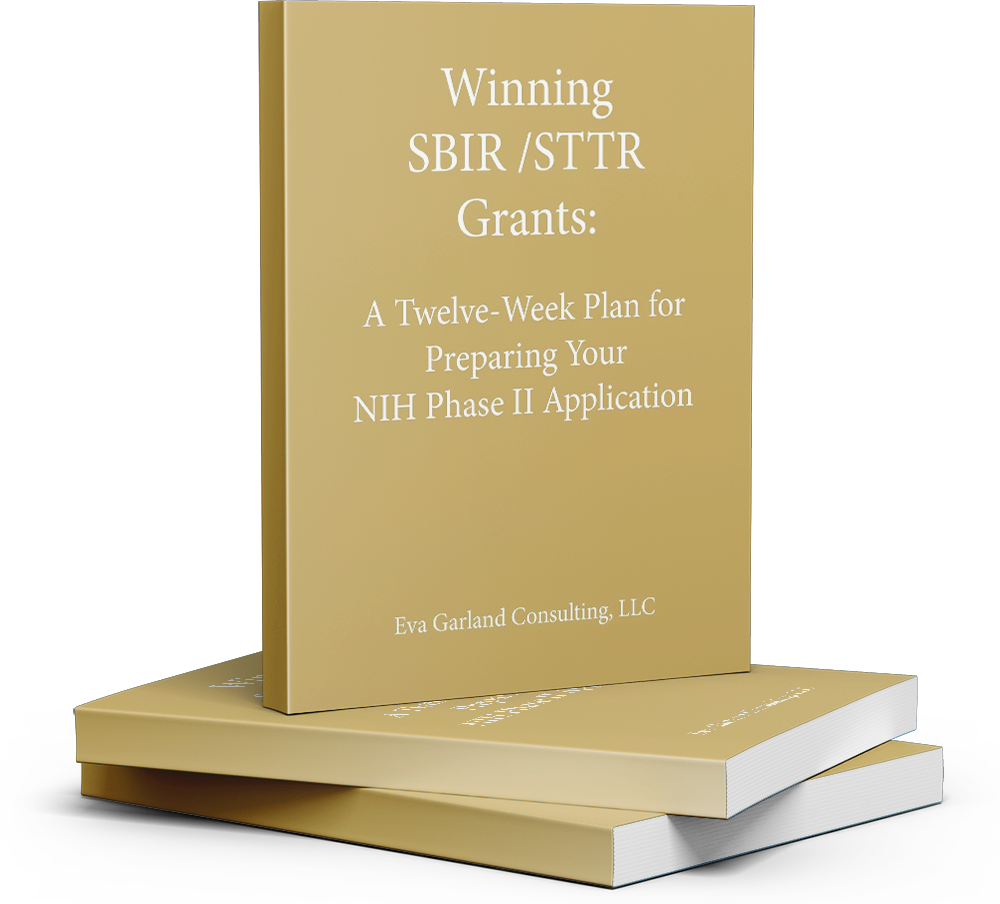
Winning SBIR/STTR Grants: A Twelve-Week Plan for Preparing Your NIH Phase II Application
This book provides a comprehensive step-by-step guide for constructing a competitive Phase II proposal. The book is divided into sections including the Commercialization Plan, the Research Plan, Other Components, and the Review and Award process.
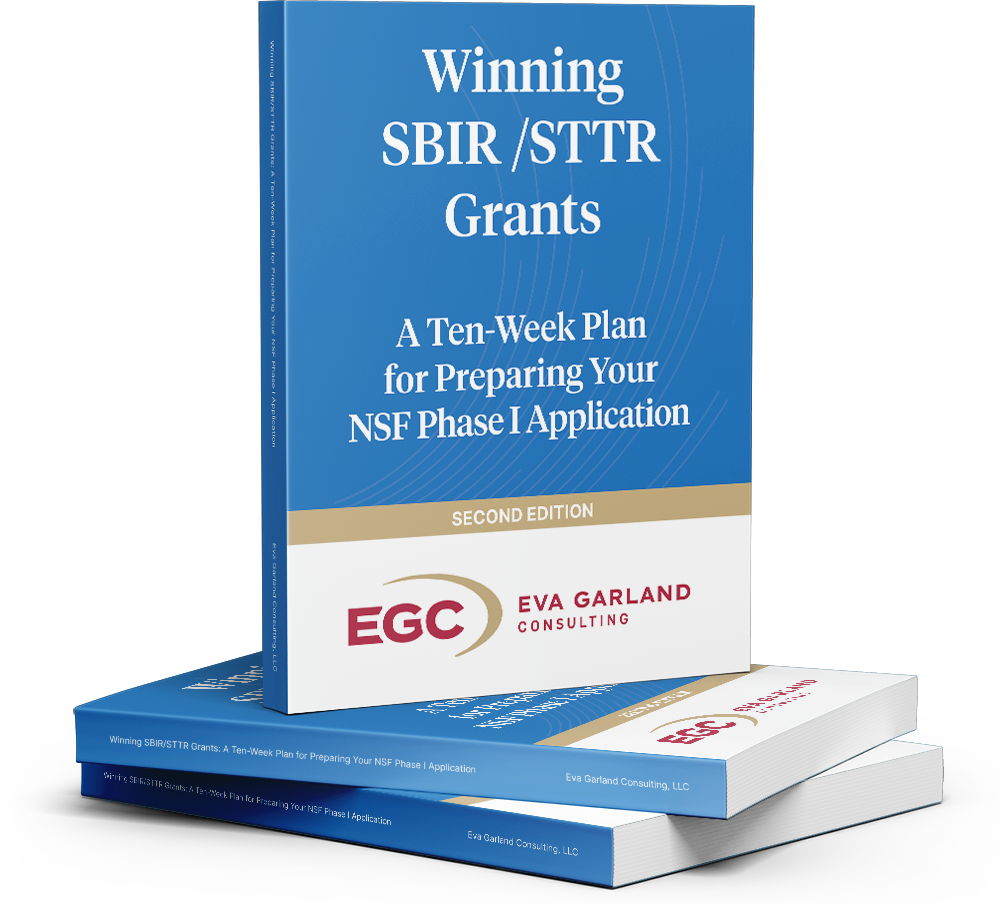
Winning SBIR/STTR Grants: A Ten-Week Plan for Preparing Your NSF Phase I Application
This book provides an easy-to-follow guide for constructing a competitive NSF Phase I proposal. The book lays out a manageable timeline for completing the Project Pitch, registrations, and the Full Application within a 10-week period.
Helpful Links
As websites often change, we have not included URL's for the web pages you will need to access to prepare and submit your application. We maintain this updated list of relevant hyperlinks, provided below.
A Ten-Week Plan for Preparing Your NIH Phase I Application – Fourth Edition
- Application Submission System & Interface for Submission Tracking (ASSIST)
- Human Subjects Research Home Page
- Decision Tool: Am I Doing Human Subjects Research
- Human Subjects Research Infographic - Research Involving Private Information or Biospecimens
- Exempt Human Subjects Research Infographic
- Select Agents and Toxins List
- Federal Select Agent Program Home Page
A Ten-Week Plan for Preparing Your NSF Phase I Application – Second Edition
Updates to NSF Book
As we alluded to in the Authors’ Note of the book, the NSF SBIR/STTR program is updated frequently. The most recent update has led to some inconsistencies between the information in the book and the program solicitation, as indicated below:
- For your project pitch, the required sections now have character limits rather than word limits (pages 16-18).
- You should submit your full application within 2 application due dates of your pitch acceptance (page vi).
- The NSF’s conversion to research.gov is complete (pages vii, 14, 84-88, 108-112). The process described in the book for entering the information in FastLane is roughly equivalent to the process for entering information in research.gov.
- If you’re applying for an STTR, you are now required to have a co-PI from the partnering research institute for STTR (page 12).
- You are no longer required to have supplementary documents for vertebrate animals and/or human subjects – some of the information is still required, but will be included in your project narrative instead (pages 24-30, 80).
- The budget amount has increased to $305,000 rather than $275,000 (page 34).
- The NSF is no longer offering the “Beat-the-Odds Boot Camp”, so you don’t need to allocate $10,000 of the budget for it. Instead, you can allocate up to $25,000 to participate in NSF I-CorpsTM (page 36, 90).
- The Biosketch and Current and Pending Support documents are now generated on the SciENcv website. You’ll need to generate a separate 1-page “Other Synergistic Activities” PDF document. The same content is needed, but the manner of filling out the templates is different (pages 37-39, 76).
- The NSF no longer allows Letters of Support (pages 40-42, 102, 104). You should still include Letters of Commitment from your subaward(s) and consultant(s).
- The Project Description sections have been re-ordered. The correct order is now Intellectual Merits, Company/Team, Broader Impacts, and Commercialization Potential (pages 46-47). The Elevator Pitch section is no longer included (pages 46-47, 65, 69-71). We recommend that you include the content for the Elevator Pitch in other sections (pages 69-71). Your Intellectual Property should be described under Commercialization Potential rather than Intellectual Merits (pages 61-63). You do not need to describe NSF lineage (page 63).
- You should upload the Project Summary as a 1-page PDF rather than copying the text into fillable boxes online (pages 101, 103).