

Key Takeaways from CEO Dr. Eva Garland’s BIO 2026 Presentation
Artificial intelligence (AI) is transforming scientific research at an unprecedented pace. From accelerating drug discovery to streamlining clinical trials, AI is changing how innovation happens, and creating new opportunities for startups, universities, and life science companies.
At the 2026 BIO International Convention, Eva Garland, Ph.D., CEO of Eva Garland Consulting (EGC), explored what these changes mean for the future of non-dilutive funding and how innovators can successfully navigate this rapidly evolving landscape.
AI Is Accelerating Scientific Innovation
Throughout history, major technological advancements such as personal computers, the internet, smartphones, cloud computing, and genome sequencing have fundamentally changed the way we live and work. AI represents the next transformative leap, but with an important difference.
Unlike previous technologies that followed predictable development paths, AI advances are occurring rapidly and often through processes that are not fully transparent. As a result, AI is accelerating scientific discovery in ways that were unimaginable just a few years ago, but the timeline of AI advancements is less predictable than with prior technologies.
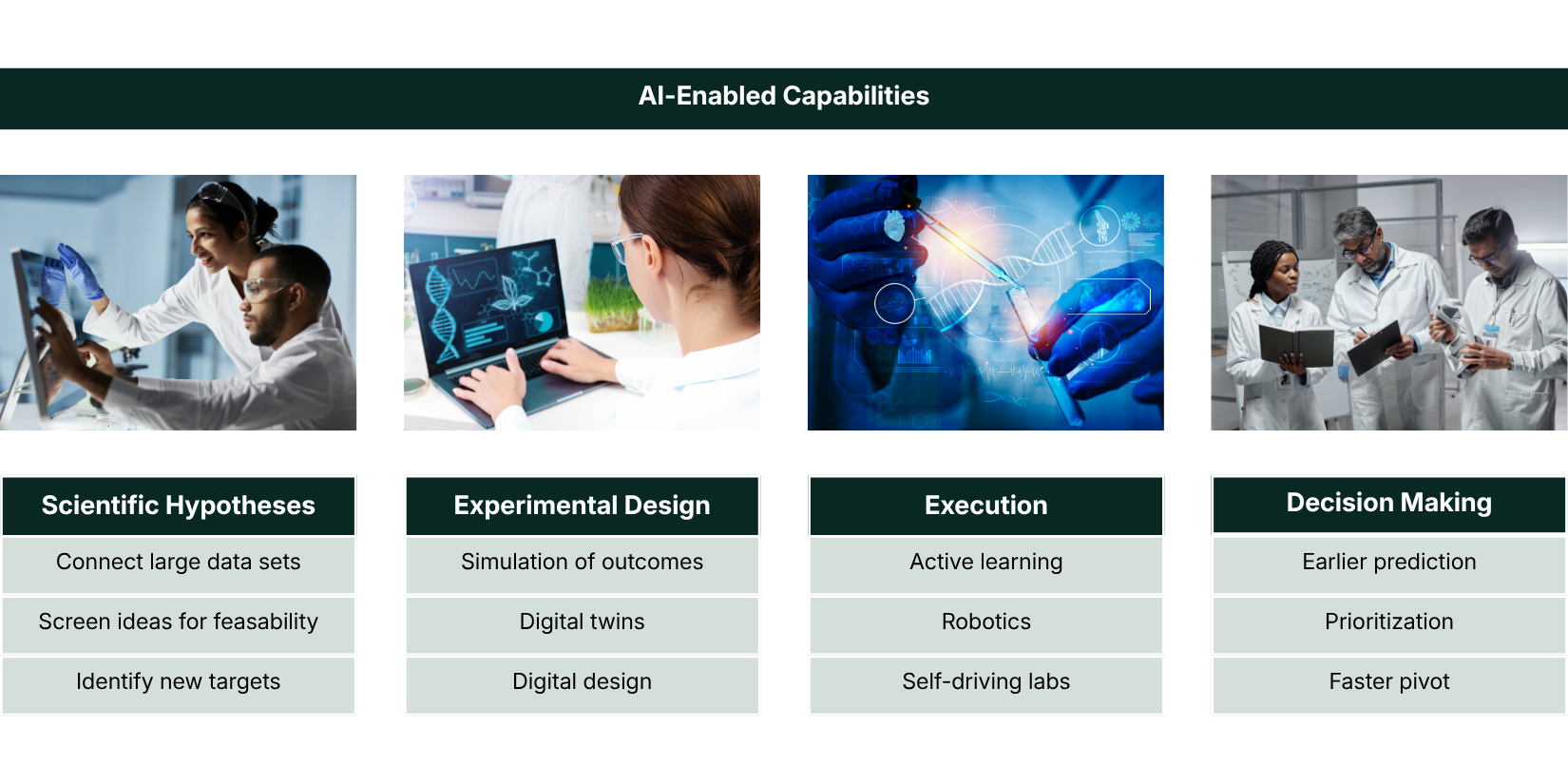
Examples where AI is already making a major impact in R&D include:
- Identifying novel therapeutic targets
- Analyzing large and complex datasets
- Designing experiments and simulating outcomes
- Creating digital twins for research and clinical applications
- Automating laboratory processes
- Improving decision-making and prioritization
Within the last few months, we’ve seen examples in which drug developers are using AI to identify promising targets in months rather than years, researchers are predicting protein structures with remarkable accuracy, and clinical trial sponsors are leveraging AI-generated digital twins to improve trial efficiency.
Simply put, AI has enabled scientific advancement to enter a new era of rapid progress.
Early-Stage Capital Can’t Keep Up with the Pace of AI
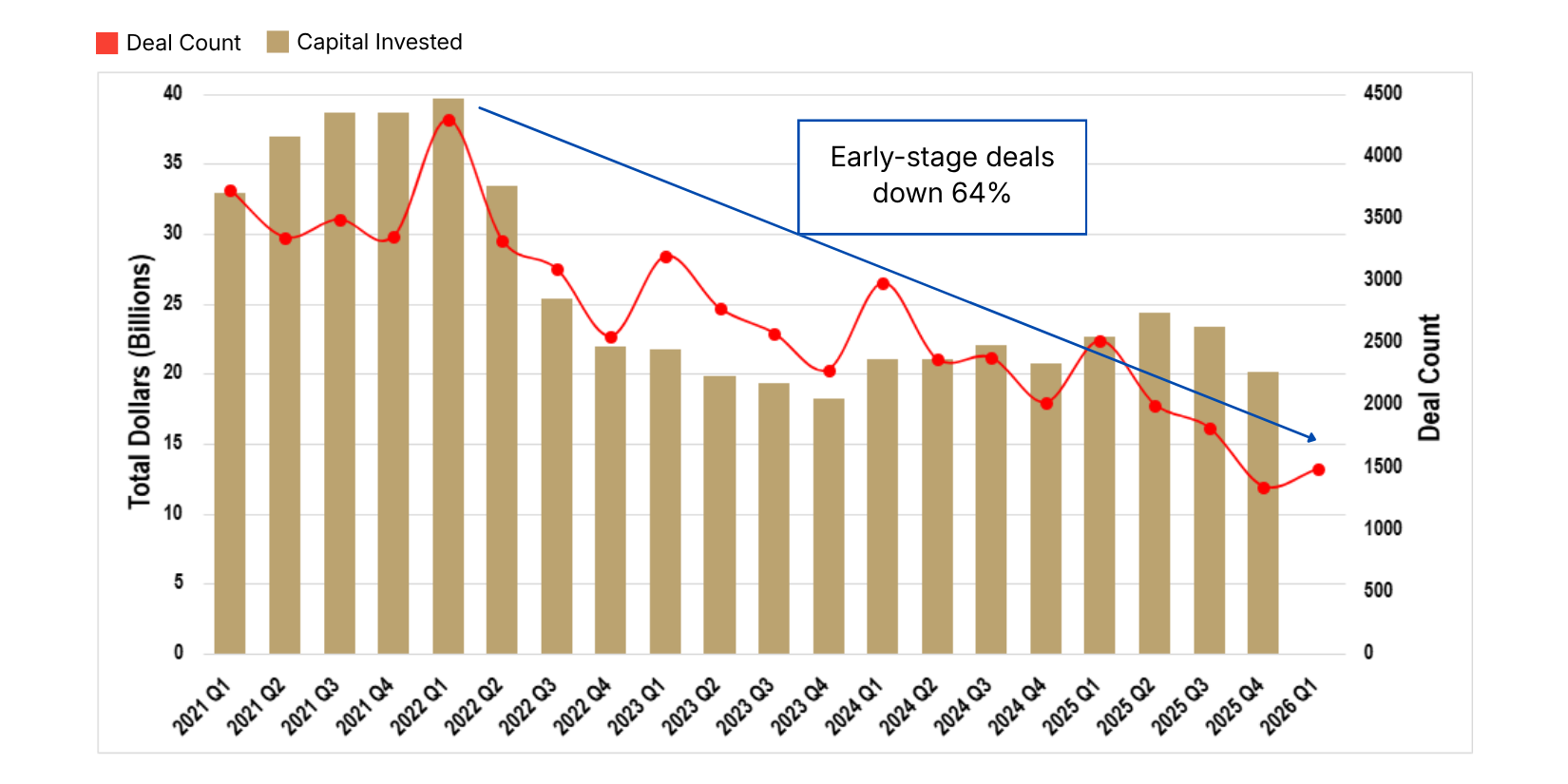
While AI has enabled the pace of innovation to accelerate, the funding environment has experienced tightening.
During her presentation, Dr. Garland highlighted how venture capital investment in life sciences has declined significantly since its pandemic-era peak. More concerning, early-stage companies have been disproportionately affected as investors shift their focus toward later-stage opportunities.
This creates a growing disconnect: The number of innovative technologies being developed continues to increase, yet access to traditional capital for early-stage companies is becoming more limited.
How Non-Dilutive Funding Fills the Void
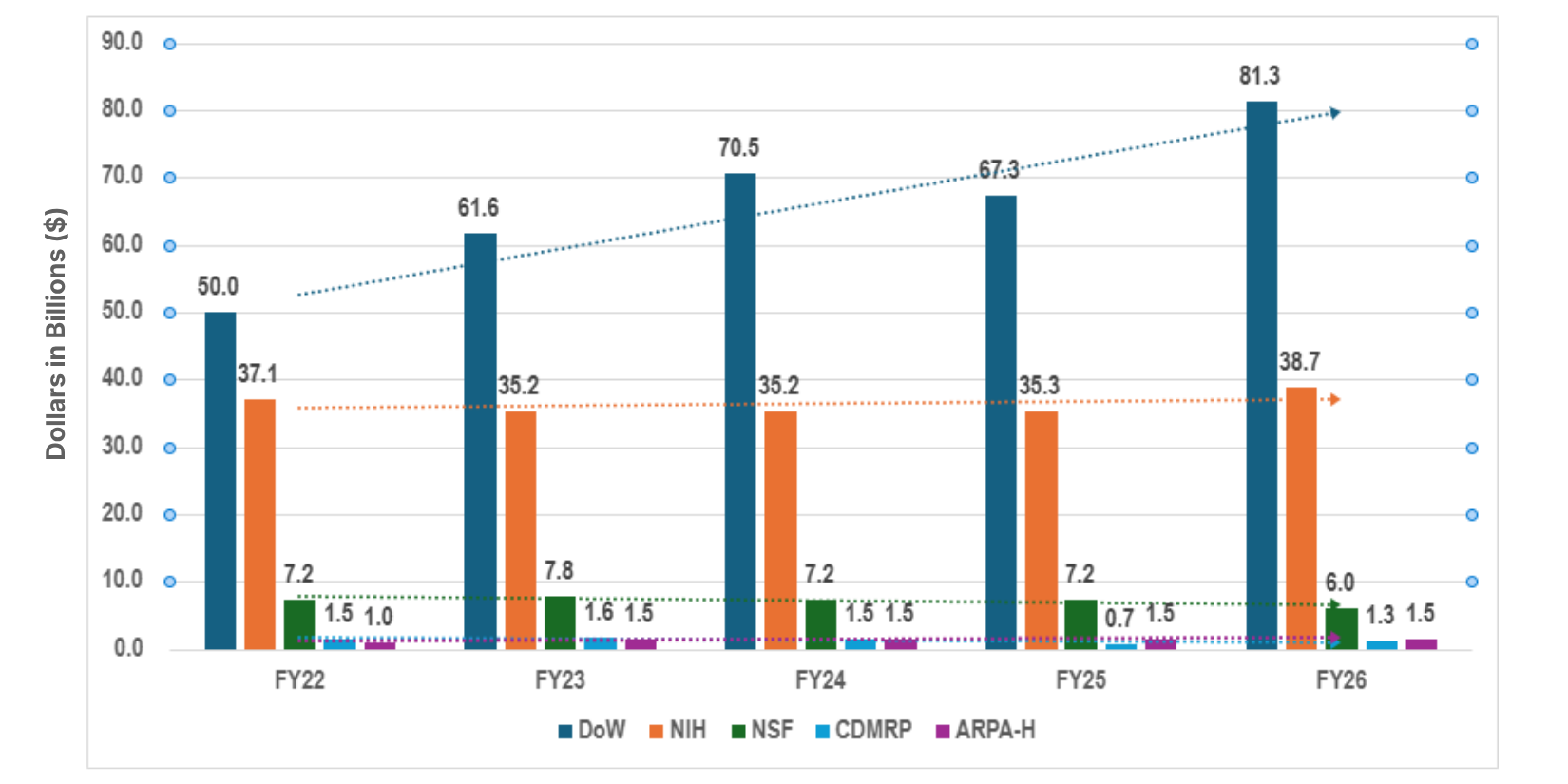
While venture capital investment has become more constrained in recent years, non-dilutive funding has remained resilient and, in many areas, expanded. Non-dilutive funding is no longer just a supplemental source of capital—it has become a critical component of a successful financing strategy, helping companies advance high-risk, high-impact technologies while preserving equity.
Federal agencies, private foundations, international funding organizations, and state programs collectively invest more than $100 billion annually in research and development. Unlike venture capital, these funding sources are specifically designed to support breakthrough innovation at its earliest and often riskiest stages.
Agencies such as NIH, NSF, ARPA-H, DoD, CDMRP, BARDA, NASA, and USDA continue to provide a valuable source of capital for life sciences technologies. In addition, the recent reauthorization of the $4 billion annual SBIR/STTR program through 2031 provides long-term funding stability for startups and small businesses, reinforcing the growing role of non-dilutive funding in the innovation ecosystem.
AI is Fundamentally Changing the Non-Dilutive Landscape
AI is not only transforming R&D; it’s also impacting the non-dilutive funding process.
Today, organizations use AI to identify funding opportunities, analyze solicitations, conduct literature reviews, develop proposal outlines, strengthen proposals, identify weaknesses before submission, and support post-award grants management. Used strategically, AI makes the funding process faster, more efficient, and more competitive.
Funding agencies are also beginning to adopt AI. Current applications focus on improving administrative efficiency and augmenting human expertise through fact-checking, proposal analysis, and reviewer selection. Over time, AI is expected to accelerate scientific review and support faster, more data-driven funding decisions.
As AI adoption grows, agencies are balancing the benefits of AI with the need to protect research integrity, transparency, intellectual property, cybersecurity, and public trust. The result is a rapidly evolving policy landscape, with each funding agency developing its own guidance for AI use.
AI Policies Continue to Evolve
There is currently no single federal policy governing AI use in the non-dilutive funding process. Instead, each funding agency is developing its own approach.
For example, NIH prohibits applications that are substantially generated by AI and actively screens submissions using AI detection software. NSF permits AI-assisted proposal development but holds applicants fully responsible for the originality and accuracy of their submissions. ARPA-H allows AI use unless prohibited by a specific funding opportunity announcement and is actively piloting AI-assisted review processes. Several other agencies, including DARPA, USDA, CDMRP, and BARDA, have not yet issued comprehensive public guidance.
The key takeaway is that AI policies are changing quickly and vary by agency. Applicants should review the latest guidance and funding opportunity announcements before every submission to ensure compliance while taking full advantage of AI’s capabilities.

Ten Best Practices for Using AI in the Non-Dilutive Funding Process
Dr. Garland provided a checklist for how to use AI effectively and responsibly to enhance your success in the non-dilutive funding process.
1. Know the Best Uses of AI
Use AI to assist with literature reviews, proposal editing, and scientific pre-review, while maintaining human oversight.
2. Provide Better Prompts
Provide the AI engine with detailed context about the funding opportunity, project goals, and review criteria to improve output quality.
3. Compare Multiple Tools
Different AI platforms produce different results. Cross-checking outputs can help identify errors and inconsistencies.
4. Protect Proprietary Information
Never upload confidential research data, unpublished discoveries, or patent-sensitive information into public AI systems.
5. Stay Current on Agency Policies
AI guidance is changing rapidly. Review the latest agency policies and funding opportunity announcements before every submission.
6. Disclose AI Use When Appropriate
Acknowledging your use of AI is increasingly important as agencies develop formal AI policies.
7. Use Your Own Voice
Reviewers want to hear from the applicant. AI should not replace your authentic scientific voice.
8. Focus on Quality, Not Quantity
While it is tempting to use AI to submit more proposals, the most competitive proposals are those that are developed thoughtfully and tailored for each solicitation.
9. Use AI as a Front-Line Reviewer
AI can act as your first reviewer, to help you identify gaps in your plan. However, you should have a human with expertise in the field provide a second opinion.
10. Validate Everything
Always verify references, scientific claims, and conclusions generated by AI.
Key Takeaways
- AI is accelerating scientific discovery, providing unprecedented opportunities for new innovations.
- As early-stage companies face increasing pressure in traditional capital markets, non-dilutive funding is an essential resource for life sciences organizations to finance their R&D.
- The future of the non-dilutive funding process in an “AI world” is changing rapidly. Organizations that keep on top of both the advantages and limitations afforded by AI will have a significant competitive advantage in securing the funding they need to advance their scientific breakthroughs.